Hazard assessment
Site-level exposure notes that show why a PPE category was considered and who owns the final decision.
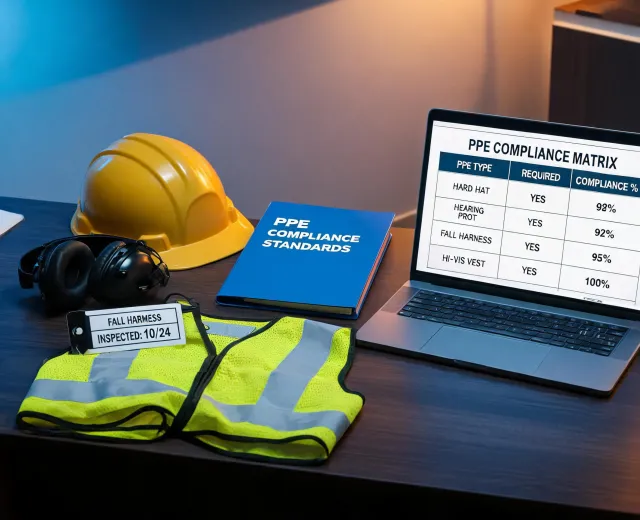
Safariland helps safety and procurement teams organize PPE decisions across OSHA workplace duties, ANSI/ISEA product standards, EN references, CSA requirements, and internal audit expectations. The program does not claim that OSHA approves products; it gives responsible teams cleaner evidence for their own review.
| Standard | Jurisdiction | Scope | Renewal Cadence | Sample Deliverable |
|---|---|---|---|---|
| OSHA 29 CFR 1910 / 1926 | United States | Employer workplace compliance duties | Annual review or site change | Hazard assessment register |
| ANSI Z89.1-2014 | North America | Industrial head protection types and classes | Product or site specification update | Helmet category selection note |
| EN 352 | European Union | Hearing protection performance references | When noise survey changes | Hearing conservation PPE crosswalk |
| ANSI Z359 | North America | Fall protection system and component references | Inspection schedule review | Fall equipment inspection template |
| ANSI/ISEA 107 | North America | High-visibility apparel classes | Project or traffic plan change | Visibility class selection guide |
Site-level exposure notes that show why a PPE category was considered and who owns the final decision.
A comparison of current issue items against documented work patterns, standards references, and supervisor feedback.
Plain-language task notes for maintenance, public works, utilities, manufacturing, or response teams.
Document slots for chemical or material information when a product group requires deeper handling review.
Records that show when supervisors communicated issue, inspection, and replacement expectations.
A structure for updating PPE guidance after near misses, failed inspections, or changed work methods.
Gather tasks, incident patterns, noise surveys, height exposure points, traffic plans, and current PPE lists.
Connect each exposure to approved Main Category groups and note any item that requires additional specialist review.
Create matrix, training, inspection, and substitution records that can be reviewed by the customer's responsible team.
Define annual review, project-change triggers, and replacement intervals for products with finite service life.
A good compliance program is only useful if it survives normal work. Safariland templates avoid dense legal phrasing and focus on fields supervisors can complete: category, task, hazard, selected standard reference, issue date, inspection owner, replacement trigger, and comments. Respirator records, when included, must cite specific NIOSH approval numbers such as TC-84A entries provided by the product documentation. Fall protection files should distinguish visual inspection, competent-person review, and removal from service.
Review incident trends and expiring inspection records before seasonal work begins.
Confirm fit feedback, replacement stock, and distributor lead times for peak work periods.
Update training rosters, site changes, and any new task risk assessments.
Prepare next-year category changes, budget notes, and documentation cleanup.
Send the sites, standards, and categories in scope. Safariland will help frame the matrix and sample deliverables for your internal review process.